Longevity beyond the gym, at work and in community
Most of your day isn't spent training. Here's how to build movement into a desk job, a workplace, and the community around you.
Written & reviewed by Thurairaj Manoharan, physiotherapist · Updated
Your formal training might be three or four hours a week. The other hundred-plus waking hours matter too, and many of them are spent sitting. NHMS 2023 found about 3 in 10 Malaysian adults (29.9%) physically inactive.
Exercise snacks for desk workers
Short bursts of movement scattered through the workday (squats between meetings, stairs instead of the lift, hourly mobility breaks, a walk after lunch) break up sitting and add to your weekly activity. WHO recommends limiting sedentary time and replacing it with activity of any intensity, even when you can't fit a full session in.
See the full playbook in exercise snacks for desk workers.
Fixing tech-neck and sitting posture
Hours hunched over a laptop shorten the chest and overload the neck and upper back. A few minutes of daily mobility (opening the chest, mobilising the upper back, strengthening the deep neck muscles) can ease stiffness and reduce the chance of it becoming pain.
This connects to the stability and mobility pillar.
Culturally-familiar movement
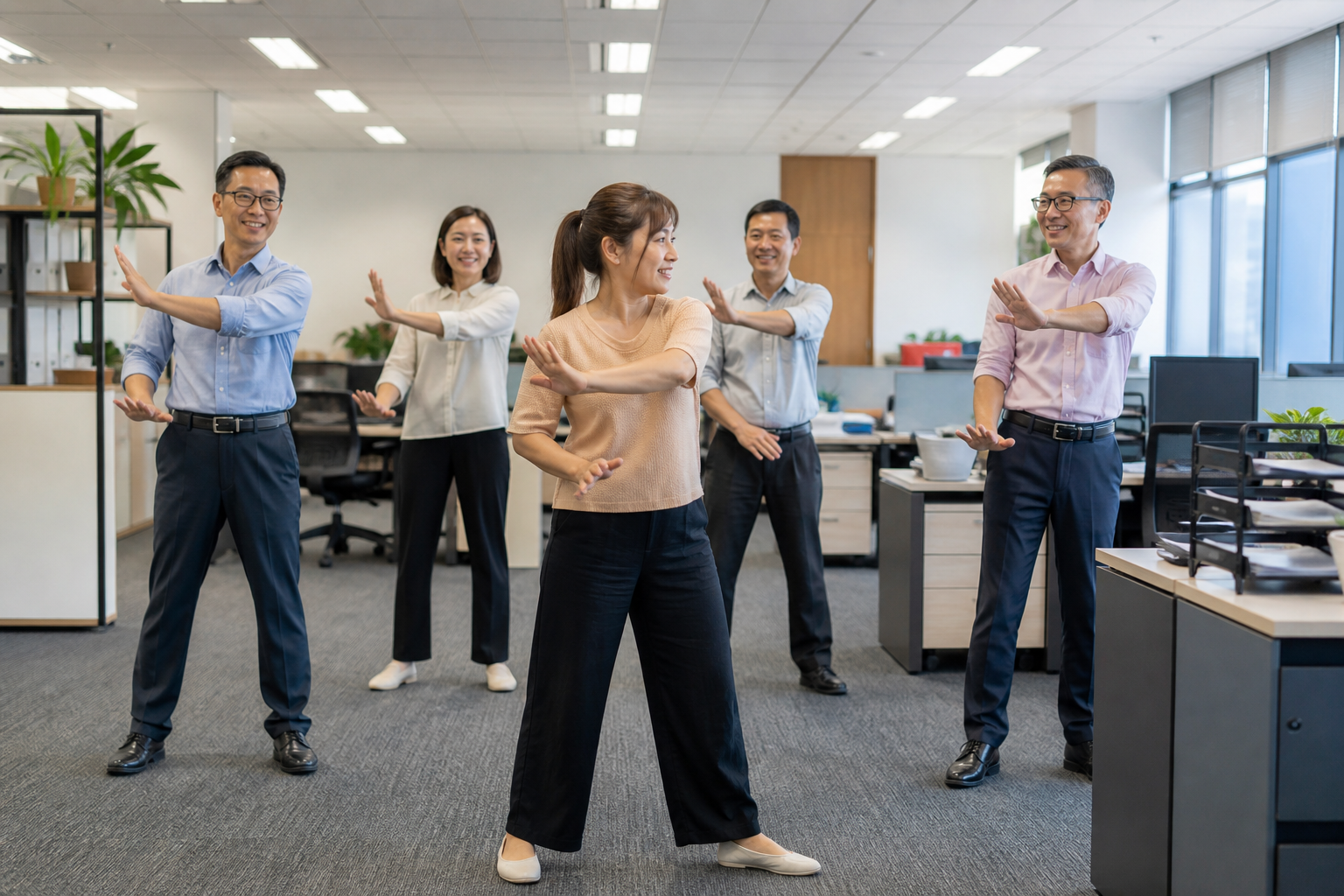
Tai chi and similar practices are familiar and social for many older Malaysians, and tai chi is one of the exercise types shown to reduce falls (Sherrington et al., 2019). They complement strength and cardio and are an easy way in for people who have never used a gym.
Corporate wellness that works
For HR teams and employers, we offer talks, workshops and structured programmes with practical movement coaching staff can use at their desks. The silver workforce, too, benefits from staying strong enough to keep working well. If you'd like to bring this to your workplace or your parent's community, message us. We run programmes across KL and Selangor, building on the complete longevity guide.
References
- Bull FC et al. (2020). World Health Organization 2020 guidelines on physical activity and sedentary behaviour. Br J Sports Med. - British Journal of Sports Medicine
- National Health and Morbidity Survey 2023 in Malaysia: methodology and main findings on non-communicable diseases (2025). Sci Rep. - Scientific Reports
- Sherrington C et al. (2019). Exercise for preventing falls in older people living in the community. Cochrane Database Syst Rev. - Cochrane
- Westcott WL (2012). Resistance training is medicine: effects of strength training on health. Curr Sports Med Rep. - Current Sports Medicine Reports
Written & reviewed by
Thurairaj ManoharanPhysiotherapist · 13+ years in healthcare
Paralysed by Guillain-Barré Syndrome as a teenager, Thurairaj rebuilt his body through physiotherapy, lived proof that the right movement, applied consistently, restores function.
Fitness for Shift Workers: Sleep, Timing and Short Sessions
Practical guide to fitting exercise around night and rotating shifts in Malaysia: when to train, short routines, sleep protection and red flags.
Read →Staying Strong as a Working Senior: Fitness for the Silver Workforce
More Malaysians work into their 60s. How to protect strength, energy and focus around a job with desk breaks, 2 strength sessions and cardio each week.
Read →Tai Chi, Qigong & Line Dancing for Older Malaysians
Tai chi, qigong and line dancing suit many older Malaysians: low impact, social and free. What they do well, where to find groups, and what to add.
Read →Corporate Wellness That Actually Works in Malaysia
Why many workplace wellness programmes fail, what trials show, and how Malaysian HR teams can build movement, manager support and measurement into work.
Read →Exercise Snacks: Fitting Movement Into a Desk Job
Short bursts of movement can break up sitting, lift fitness and ease tech-neck. A practical exercise-snack menu for KL and Cyberjaya desk workers.
Read →Senamrobik and Line Dancing for Older Malaysians
Senamrobik and line dancing give older Malaysians cardio, balance and social contact. What they do well, what they miss, and how to join safely.
Read →Silat and Traditional Movement as Longevity Training
Can silat, tai chi and qigong support healthy ageing? What the evidence says, what they miss, and how to start safely as an older adult in Malaysia.
Read →Building a Movement Culture at Work
How employers can build a workplace where movement is normal: what the evidence says about sitting, which changes work, and a practical Malaysian plan.
Read →Frequently asked questions
How can I fit movement into a desk job?
Use 'exercise snacks', short bursts through the day: bodyweight squats between meetings, stairs instead of the lift, a two-minute mobility break each hour, and a walk after lunch. They break up sitting and add up to real fitness.
Do you run corporate wellness programmes?
Yes: for HR teams and employers we offer talks, workshops and structured movement programmes aimed at changing behaviour rather than a one-off webinar. Message us to discuss your workplace.
Is traditional movement like tai chi good for longevity?
Yes. Tai chi has evidence for reducing falls in older adults (Sherrington et al., 2019), and tai chi and qigong are familiar to many Malaysians. They complement strength and cardio, especially for older adults.
Build a movement culture, at home or at work.
Personal coaching and corporate programmes across KL & Selangor.
Start with a free, no-obligation chat on WhatsApp
Home visits across Kuala Lumpur & Selangor (Klang Valley) and Ipoh · in-centre by appointment, Putra Heights