Senamrobik and line dancing give older Malaysians cardio, balance and social contact. What they do well, what they miss, and how to join safely.
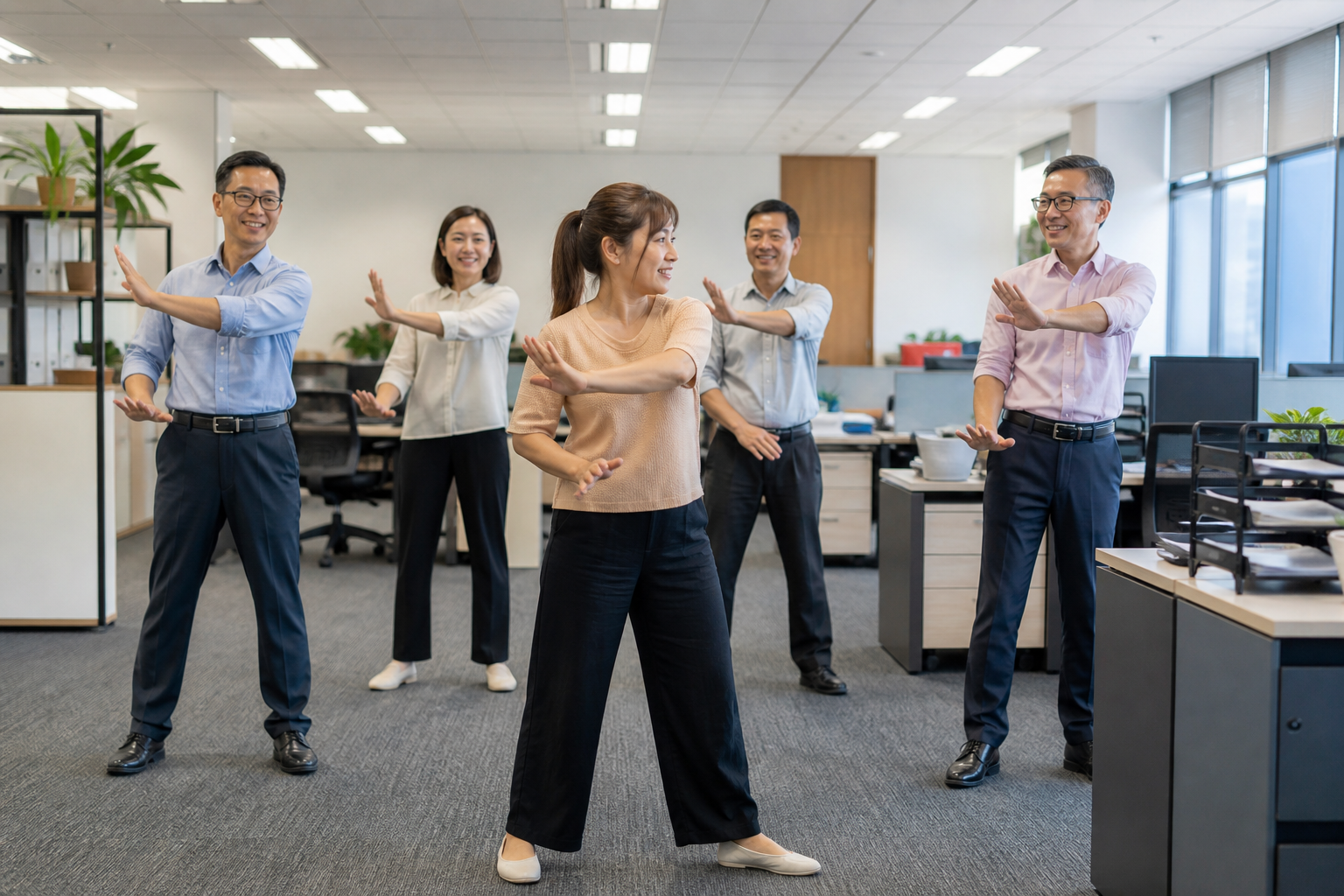
Senamrobik and line dancing are good exercise for older Malaysians. They raise your heart rate for a sustained period, challenge balance and coordination, and give you a regular social reason to turn up. Their main gap is muscle and bone loading, so add two short strength sessions a week.
Across Malaysia, groups meet in community halls, taman recreational areas, surau and mosque compounds, condominium function rooms and neighbourhood studios. Many are free or low-cost. For many people that makes them the most realistic place to start.
What do they do for your body and brain?
The short version is that you train several things at once without feeling like you are exercising.
- Cardio. Continuous movement to music for 30 to 60 minutes keeps you in the moderate zone. Moderate effort means you can talk but not sing. That counts towards the aerobic target in the Zone 2 and cardio guidance.
- Balance and coordination. Turns, weight shifts and changes of direction challenge your stability. This supports fall prevention, though it should not be your only balance work.
- Brain. Remembering step sequences while moving is a natural dual-task exercise.
- Mood and connection. Music, company and routine help against loneliness. See exercise for mood and anxiety in older adults.
A systematic review of 18 dance studies in older adults by Hwang and Braun concluded that dance, regardless of style, can significantly improve muscular strength and endurance, balance and other aspects of functional fitness. Eight of nine studies that measured balance, and eight of ten that measured cognition, reported significant improvements. The studies vary in quality and in the dance styles used, so treat the results as encouraging rather than definitive.
What are the limits?
Be realistic about what a dance class cannot do.
- Muscle and bone. Most classes use bodyweight at a moderate pace. They do not provide the progressive loading needed to rebuild muscle lost to sarcopenia or to protect bone density.
- Falls. The Cochrane review found high-certainty evidence that exercise reduces falls by about 25 percent, led by balance and functional programmes. Evidence for dance on its own was uncertain.
- Variable quality. Class intensity, instruction and music tempo vary widely.
A simple weekly pattern
The WHO recommends that older adults do 150 to 300 minutes of moderate activity a week, muscle-strengthening on at least 2 days, and varied multicomponent activity including balance and strength on 3 or more days. Here is one way dancing can fit:
| Day | Activity | Time |
|---|---|---|
| Mon | Senamrobik or line dancing class | 45 min |
| Tue | Short strength session at home | 20 min |
| Wed | Brisk walk | 30 min |
| Thu | Senamrobik or line dancing class | 45 min |
| Fri | Strength plus balance session | 20 min |
| Weekend | Walk, family outing or a social dance | 30 to 45 min |
Strength moves such as sit-to-stands, step-ups and band rows are enough to start. See strength training for longevity and group and community exercise in Malaysia. If you also enjoy slower, mind-body practices, see tai chi and qigong for older Malaysians.
How to choose a class
- Ask about level. Look for classes that welcome beginners and older adults, and where a low-impact option is shown for every move.
- Watch a session first. Check that the floor is non-slip, there is space between people and the instructor demonstrates both a gentle and a harder version.
- Check the tempo. You should be able to hold a conversation at moderate effort.
- Look for a warm-up and cool-down of about 5 to 10 minutes each. See warm-up routine after 40 and cool-down for older adults.
- Try two or three groups before deciding. Fit and friendliness matter as much as the choreography.
Your local community centre, taman association, or residents’ committee is a good place to ask. For more places to move, see free outdoor gyms in the Klang Valley and mall walking in the Klang Valley.
Doing it in Malaysia’s heat
Outdoor and open-hall sessions can be hot and humid. Pick early morning or evening, wear light clothing, sip water every 15 to 20 minutes, and slow down if you feel dizzy or unusually tired. On hazy days, move indoors or reduce the intensity. See staying hydrated in tropical heat and should you exercise during the haze.
Safety and red flags
Start at a pace that lets you talk. Keep movements within a comfortable range, and skip jumps, deep twists or fast spins if you have osteoporosis, knee or hip arthritis or balance problems. Wear supportive, non-slip shoes, not slippers or socks.
Get medical advice before joining if you have heart disease, uncontrolled high blood pressure, diabetes on insulin, recent surgery or dizziness. Stop and seek help for chest pain or pressure, severe breathlessness, fainting or sudden sharp joint pain. See when to get medical clearance before exercise.
Key takeaways
- Senamrobik and line dancing provide moderate cardio, balance and coordination work, plus social contact that helps people keep going.
- Reviews of dance in older adults report improvements in balance and cognition, but they do not build much muscle or bone.
- Add two short strength sessions a week and some specific balance work to cover the gaps.
- Choose a class with low-impact options, a non-slip floor and a tempo where you can still talk.
- In Malaysia, go early or late, hydrate regularly, and stop for chest pain, dizziness or sharp joint pain.
If you want a strength and balance routine that fits around your dance classes, we run home-visit assessments across KL and Selangor.