Many women over 40 eat less protein than they need to keep muscle and bone through menopause. How much to aim for, local sources and a sample day.
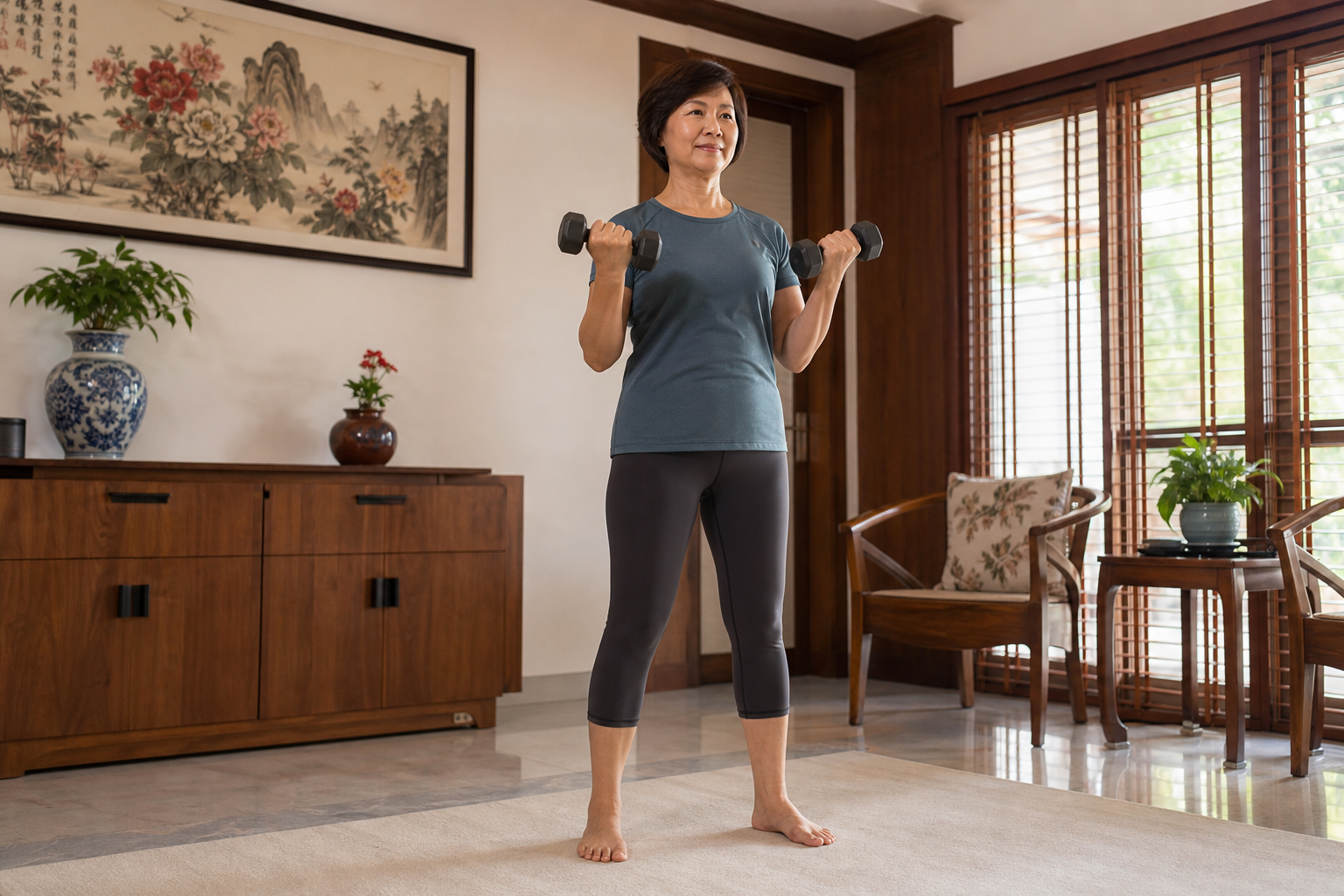
Most women over 40 who exercise regularly do better with about 1.2 to 1.6 g of protein per kg of body weight a day, spread over three or four meals, than with the bare minimum. For a 60 kg woman that is roughly 72 to 96 g. Together with strength training, it is one of the most practical ways to protect muscle, strength and independence through perimenopause and beyond.
Why does protein matter more after 40?
Two things change. First, the menopause transition is associated with loss of lean mass and gain in fat mass, a pattern described in reviews of body composition across menopause, with falling oestrogen also linked to bone loss. This raises the long-term risk of sarcopenia and osteoporosis. Second, ageing muscle becomes less responsive to small doses of protein, so a larger portion at each meal is needed to trigger the same repair. Meanwhile, appetite and eating patterns often shift towards smaller, carbohydrate-heavy meals.
The result is that many women quietly under-eat protein just when they need it. See perimenopause vs menopause training for the hormonal background.
How much protein do you need?
The Malaysian Recommended Nutrient Intake (2017) lists about 50 g a day for women, and a protein share of 10 to 20 percent of energy. That is the amount to prevent deficiency, not necessarily the amount to build and keep muscle.
The PROT-AGE study group recommends at least 1.0 to 1.2 g per kg per day for people over 65, 1.2 g or more for those who exercise, and 1.2 to 1.5 g for those with acute or chronic illness. A meta-analysis in the British Journal of Sports Medicine found that about 1.6 g per kg per day might be needed to maximise gains in fat-free mass alongside resistance training in healthy adults. Neither source is specific to women aged 40 to 65, so treat the range as a sensible target rather than a rule.
| Body weight | 1.2 g/kg | 1.6 g/kg |
|---|---|---|
| 50 kg | 60 g | 80 g |
| 60 kg | 72 g | 96 g |
| 70 kg | 84 g | 112 g |
| 80 kg | 96 g | 128 g |
Spread it out. Aim for 20 to 30 g at each main meal, and a protein snack if needed. For timing detail see protein timing after 50 and how much protein after 50.
What does 80 to 90 g look like in a Malaysian day?
| Meal | Example | Protein (approx.) |
|---|---|---|
| Breakfast | 2 eggs, 1 cup soya milk, wholemeal toast | 20 g |
| Lunch | Grilled fish or chicken breast (100 g cooked), rice, vegetables, tempeh | 30 g |
| Snack | Plain yoghurt with nuts, or a small handful of boiled peanuts | 8 g |
| Dinner | Dhal, tofu and stir-fried vegetables, 1 egg | 20 g |
Values are approximate and vary by portion. Nasi lemak with only sambal and egg, roti canai, or kuih for breakfast often leave you under 10 g, so add an egg, tofu or milk. See Malaysian foods for longevity and eating for stable blood sugar for more ideas.
Protein plus strength training
Protein supplies the building blocks and training supplies the signal. Without lifting, extra protein does little for muscle. Start with strength training for women over 40 and 50 or the menopause-focused strength training after menopause, two to three sessions a week.
Safety and who should check first
For most healthy women, getting protein from whole foods is safe. Speak to your doctor or dietitian first if you have:
- Chronic kidney disease or reduced kidney function (see exercise and kidney disease)
- Liver disease
- A history of eating disorder
- Gout, which may need food-specific advice
- Pregnancy or breastfeeding, where needs are different
Seek medical advice for unexplained weight loss, ongoing fatigue, weakness, swelling or foamy urine. Supplements are optional, so choose reputable brands. This is general education, not personalised medical or dietetic advice. If you would like a plan that combines strength training with realistic local meals, we run home-visit assessments across KL and Selangor.
Key takeaways
- Many active women over 40 do well on about 1.2 to 1.6 g protein per kg a day, which is above the 50 g minimum in the Malaysian RNI.
- Spread protein across meals, with 20 to 30 g at breakfast, lunch and dinner.
- Local foods such as eggs, fish, tofu, tempeh, dhal and milk cover most needs without powders.
- Pair protein with strength training two to three times a week, or the extra protein does little for muscle.
- Check with your doctor first if you have kidney or liver disease.