How to exercise safely on metformin, statins, beta-blockers, insulin, sulfonylureas, diuretics and blood thinners, with Malaysian heat tips.
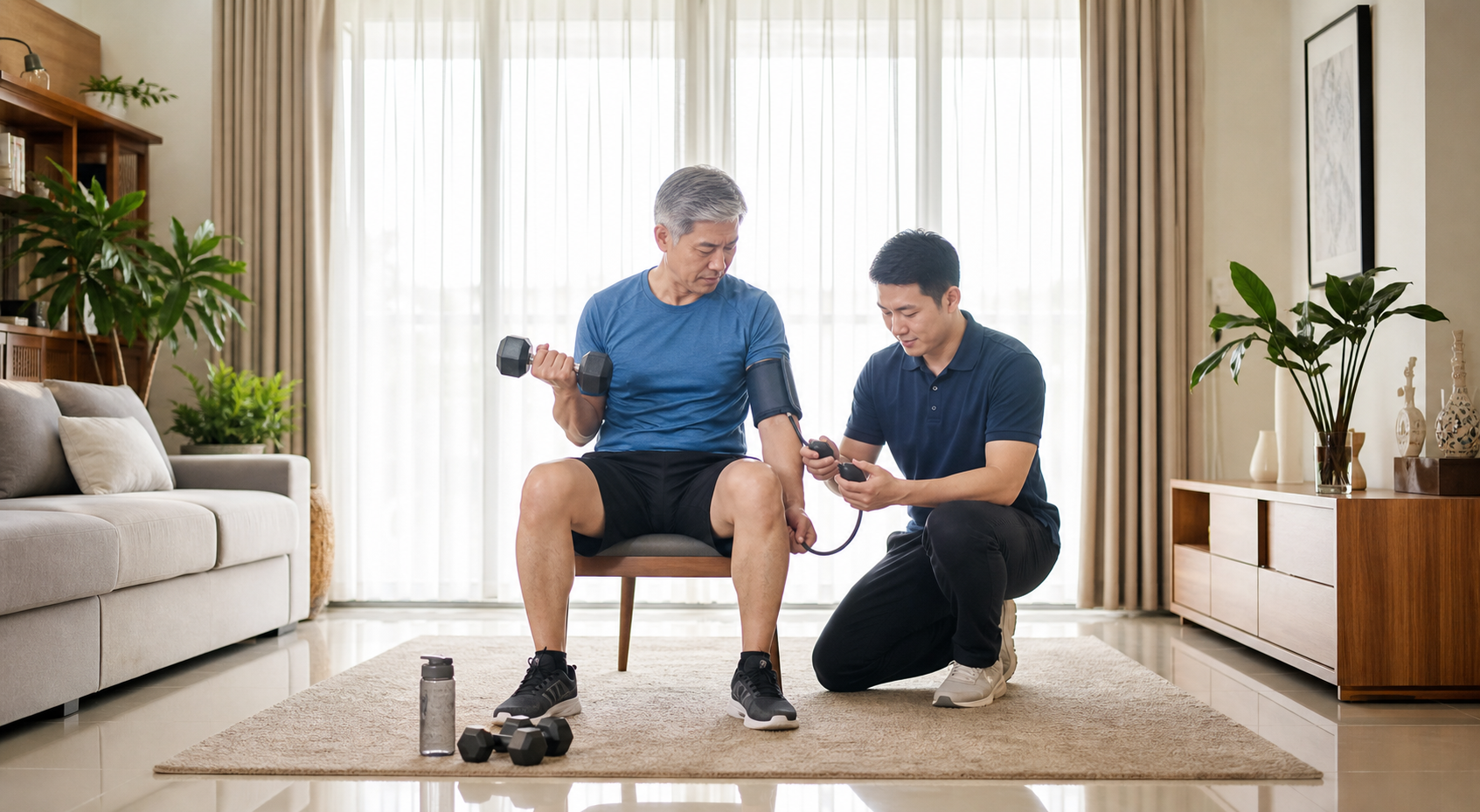
Most people on regular medicines can and should exercise. The medicine changes how you monitor effort, when you eat or check glucose, and which warning signs matter. Beta-blockers mean you use perceived exertion instead of heart rate, insulin and sulfonylureas carry a low-sugar risk, diuretics raise the risk of dehydration in Malaysian heat, and blood thinners call for fall-safe choices.
This guide covers the common groups seen in Klang Valley clinics. It is general education. Your doctor or pharmacist knows your doses, so confirm any change with them and never stop a medicine to exercise.
Should I tell my doctor before I start exercising?
If you already walk and do light activity without symptoms, you can usually continue. See your doctor first if you are starting something new and you have heart disease, diabetes on insulin, uncontrolled blood pressure, kidney disease, or new chest pain, breathlessness or dizziness. Our guide to when to get medical clearance before exercise lists the triggers.
Bring a list of all medicines, including supplements and traditional remedies, to the appointment. Several herbal products affect blood pressure, blood sugar or bleeding, and a pharmacist can check them against your prescriptions.
Metformin: any special precautions?
Metformin on its own rarely causes low blood sugar, because it works mainly by reducing glucose release from the liver and improving insulin sensitivity. It is the most commonly prescribed diabetes medicine in Malaysia, and exercise is encouraged alongside it.
- Take it with food, as prescribed. Stomach upset is common and can feel worse when you train hard soon after a dose.
- If you also take insulin or a sulfonylurea, the hypoglycaemia advice below applies.
- Keep drinking fluids. Severe dehydration or illness with vomiting is a reason to pause and call your doctor, because kidney function matters for metformin safety.
The ADA 2024 Standards recommend that adults with type 2 diabetes do at least 150 minutes of moderate to vigorous activity a week plus 2 to 3 sessions of resistance training on non-consecutive days. For the full programme, see exercise for type 2 diabetes and our article on resistance training for type 2 diabetes in Malaysia.
Statins: do they cause muscle pain with exercise?
Statins lower LDL cholesterol and reduce heart attacks. Statin-associated muscle symptoms are the most common side effect, reported by an estimated 10 to 25 percent of people on treatment, and typically feel like aching, cramps or fatigue in the thighs and calves (Thompson et al. 2016).
Practical points:
- Exercise does not need to stop. Start with lower intensity and progress over several weeks.
- A mild ache that is symmetrical, comes on after a few weeks and eases with rest is common. Report it at your next visit; a dose change or a different statin often solves it.
- Severe pain, weakness, or dark (tea or cola coloured) urine after exercise needs same-day medical review, because it can signal muscle breakdown.
- Training adaptation may be reduced. In Mikus et al. (2013), 12 weeks of aerobic training with simvastatin 40 mg gave smaller gains than exercise alone, and the usual rise in muscle mitochondrial content was blunted. This is no reason to stop a statin, since the cardiovascular benefit is large for people who need one.
If you are using exercise to bring cholesterol down, read exercise for high cholesterol and talk to your doctor before changing medicine.
Beta-blockers: why is heart rate unreliable?
Beta-blockers such as bisoprolol, metoprolol, atenolol and propranolol blunt the heart-rate response to effort. A person who is working hard may see a heart rate that looks easy, so the usual formulas (220 minus age, or percentages of heart-rate reserve) are inaccurate. Studies of exercise prescription in people on beta-blockers show that heart-rate targets are of limited accuracy (Wonisch et al. 2003).
Use the Borg scale instead.
| Borg 6 to 20 rating | What it feels like | Use |
|---|---|---|
| 9 to 10 | Very light | Warm-up, cool-down |
| 11 to 12 | Light | Easy walking, recovery |
| 13 to 14 | Somewhat hard | Main aerobic work for most people |
| 15 to 16 | Hard | Short intervals, only if cleared by your doctor |
The talk test works well alongside it: you should be able to speak in full sentences at Zone 2 effort. Our guide to finding your Zone 2 explains it, and the heart rate zones tool can be used with caution for non-medicated people. If you take a beta-blocker, rely on effort rather than the zones it prints.
Beta-blockers can also cause dizziness when you stand quickly. Rise slowly from floor exercises and do not stop suddenly from a hard effort; keep walking for a few minutes.
Insulin and sulfonylureas: how do I prevent hypoglycaemia?
Insulin and sulfonylureas (for example gliclazide, glimepiride and glibenclamide) can push blood sugar too low during exercise. The ADA position statement notes that hypoglycaemia during exercise, or for up to about 12 hours afterwards, is the main risk for people with type 2 diabetes who take these medicines. Exercise raises insulin sensitivity for hours, which is why a low can strike at night after an evening session.
Steps to follow:
- Check glucose before you start. If it is low or at the bottom of your target range and you are on insulin or a sulfonylurea, a small carbohydrate snack first is often advised. Your own pre-exercise target should come from your doctor or diabetes educator.
- Carry 15 g of fast-acting carbohydrate, such as glucose tablets, a small box of fruit juice or 3 to 4 sweets.
- Check again after exercise, at bedtime on exercise days and, if you have had lows, during the night.
- Learn the symptoms: shakiness, sweating, hunger, confusion, a pounding heart. Stop, treat with 15 g carbohydrate, wait 15 minutes and recheck.
- Ask whether the dose or timing of insulin or tablets should change on days you train. Do not adjust doses on your own.
- Wear identification and avoid exercising alone if you have a history of severe lows.
Avoid injecting insulin into a thigh or arm you are about to work hard, since faster absorption can lower glucose. Newer diabetes medicines (SGLT2 inhibitors, GLP-1 receptor agonists, DPP-4 inhibitors) cause low blood sugar rarely when used alone. SGLT2 inhibitors raise the risk of dehydration, so the heat advice below applies.
Also note that very high glucose with ketones is a reason to skip exercise. Follow your clinic’s rule for this.
Diuretics (water tablets): what changes in Malaysian heat?
Diuretics such as furosemide, hydrochlorothiazide and indapamide increase urine output and can lower sodium and potassium. In heat and humidity, when you also sweat heavily, the combination raises the risk of dehydration, low blood pressure, cramps and fainting.
- Train early morning or in an air-conditioned mall or gym. See exercising in Malaysia’s heat and humidity and staying hydrated in tropical heat.
- Drink small amounts regularly. If your doctor limits your fluids because of heart failure or kidney disease, follow that instruction instead.
- Weigh yourself before and after a session. A drop of more than about 1 to 2 percent of body weight means you lost a lot of fluid.
- Stop at once and cool down if you feel light-headed, nauseous, confused, very tired, or stop sweating. Heat exhaustion and heat stroke are medical problems, described in the ACSM position stand (Armstrong et al. 2007).
- On very hot or hazy days, switch to indoor work. See should you exercise during the haze.
Ask your doctor to check kidney function and electrolytes if you start a diuretic and a new exercise plan together. Many antihypertensives, including ACE inhibitors and ARBs, can also cause dizziness with dehydration.
Anticoagulants and antiplatelets: what should I avoid?
Warfarin, apixaban, rivaroxaban, dabigatran and aspirin reduce clotting. Exercise is beneficial, and it is not usually restricted by the medicine itself. The concern is bleeding from injury.
- Choose low-risk activities: walking, cycling on paths, swimming, machine or band-based resistance training, tai chi.
- Avoid contact sports, trampolining, and activities with a high chance of falls, such as running on uneven pavement in the dark.
- Use good technique and controlled loads. Avoid sudden maximal efforts and breath-holding that can spike blood pressure.
- Any head injury, even mild, needs medical review the same day. Unusual bruising, nosebleeds that do not stop, blood in urine or black stools also need review.
- If you take warfarin, keep your diet and INR checks consistent when your activity level changes.
Use the fall risk check if balance is a concern, and see reducing fall risk at home.
What are the general warning signs to stop?
Stop exercising and seek care for:
- Chest pain or pressure, pain spreading to the arm or jaw.
- Shortness of breath that is out of proportion to effort.
- Fainting, near-fainting or sudden dizziness.
- Palpitations that do not settle.
- Severe or new muscle pain with dark urine.
- Signs of hypoglycaemia that do not respond to treatment.
- Signs of heat illness.
Call 999 for chest pain, collapse or suspected stroke.
A quick medication-by-medication summary
| Medicine group | Main exercise issue | What to do |
|---|---|---|
| Metformin | Stomach upset, dehydration | Take with food, keep hydrated |
| Statins | Muscle aches | Progress gradually, report severe pain or dark urine |
| Beta-blockers | Blunted heart rate | Use Borg RPE 11 to 14 and the talk test |
| Insulin, sulfonylureas | Hypoglycaemia up to 12 hours after | Check glucose, carry sugar, ask about dose |
| Diuretics | Dehydration, low sodium or potassium | Train in cool hours, drink regularly, stop if dizzy |
| Anticoagulants | Bleeding after injury | Avoid contact and fall-prone activity, get head injuries checked |
For a broader look at long-term conditions and training, visit our exercise for chronic conditions hub.