How much to drink when exercising in Malaysia's heat, when electrolytes help, how to check hydration, and the warning signs that mean stop.
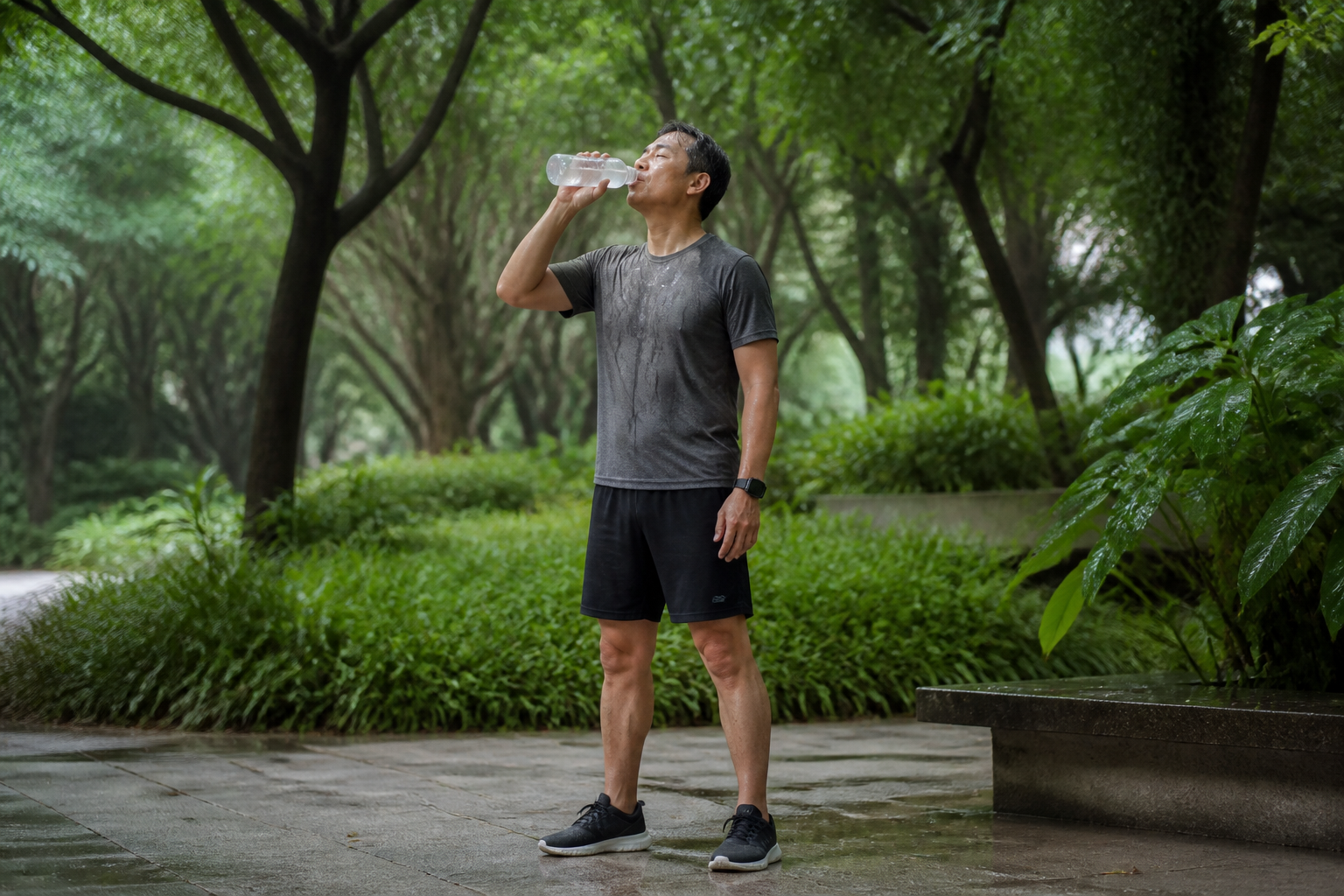
For most healthy adults training in Malaysia, the practical answer is to start each session well hydrated, drink small amounts regularly while you exercise, and replace what you lose afterwards, using thirst and urine colour as your guide. Add salt or an electrolyte drink only for long or very sweaty sessions. Heat and humidity make dehydration easy to miss, because sweat that cannot evaporate leaves you hot, tired and working harder than expected.
Why is hydration harder in Malaysian weather?
Malaysia is hot and humid all year. When the air is already saturated, sweat evaporates poorly, so it is a less effective cooling mechanism. Your body responds by sweating more and pushing blood towards the skin, which raises your heart rate for the same effort. A pace that is a comfortable Zone 2 effort in cool conditions can feel hard here for this reason, and dehydration makes it worse. See exercising in Malaysia’s heat and humidity for pacing and timing.
The ACSM position stand on fluid replacement sets the goal: begin exercise well hydrated, and limit excessive dehydration during exercise, since individual sweat rates and drinking opportunities vary widely (Sawka et al., 2007). There is no single number of cups that fits everyone.
How much should I drink?
Use a simple routine rather than a formula:
- Before. Drink fluids steadily through the morning. Have 300 to 500 ml in the hour before you start, and check that your urine is pale yellow.
- During. Take small sips every 10 to 15 minutes if you exercise for more than 30 minutes. Sip to thirst. Do not force fluids.
- After. Drink over the next few hours, and eat a normal meal with some salt in it. If you want to measure, weigh yourself before and after a long session. Each kilogram lost is roughly a litre of fluid to replace.
Thirst is a decent guide for most people. The Third International Exercise-Associated Hyponatremia Consensus statement concluded that drinking according to thirst is sufficient to prevent both dehydration and hyponatremia (Hew-Butler et al., 2015). Older adults can have a weaker thirst sense, so they benefit from a drinking schedule rather than relying on thirst alone.
Can you drink too much?
Yes, though it is uncommon in short sessions. Drinking much more than you sweat, especially plain water over many hours, can lower blood sodium and cause exercise-associated hyponatremia. Symptoms include headache, nausea, bloating, confusion and, in severe cases, seizures. If you finish a long session feeling bloated and weigh more than when you started, you drank too much.
When do electrolytes matter?
| Situation | What helps |
|---|---|
| Walk, home strength session, under 60 minutes | Water |
| 60 minutes or more, or very sweaty | Water plus salty food, or an electrolyte drink |
| Cramps or a very salty crust on skin or clothes | More sodium with food and fluids |
| Using a sports drink | Fine, but count the sugar if you have diabetes |
You do not need an expensive product. Many Malaysians already have good options at the mamak or kopitiam: soup with a meal, or isotonic drinks and coconut water in moderation. A pinch of salt in a bottle of water also works. If you have high blood pressure, kidney disease or heart failure, or have been told to restrict salt or fluid, ask your doctor before adding salt or electrolyte drinks.
How do I tell if I am dehydrated?
- Urine colour. Pale straw is good. Dark amber means you are behind.
- Thirst, dry mouth and headache.
- Heart rate. If it is much higher than usual for an easy pace, suspect heat or fluid loss.
- Body weight. A drop of 1 to 2 percent over a session suggests you lost more than you replaced.
What are the warning signs to stop?
Stop, move into shade or an air-conditioned space, and cool down with water and a damp cloth if you have dizziness, nausea, severe cramps, a pounding headache or an unusually fast heart rate. Treat the following as an emergency and call 999: confusion, slurred speech, fainting, vomiting that does not stop, a collapse, or hot, dry skin with a very high temperature. These can be signs of heat stroke, which needs urgent medical care.
People at higher risk include older adults, anyone on diuretics or blood pressure medication, people with diabetes or kidney disease, and those who are unwell or have a fever. Ask your doctor about hydration and training in heat, and see exercise on common medications.
Simple habits for the Klang Valley
- Keep a bottle with you on walks, and plan routes that pass a water point or shop.
- Train early or after sunset. During haze days, move indoors; see should you exercise during the haze.
- Wear light, breathable clothing.
- Treat recovery as part of the day: recovering in tropical heat covers cooling and sleep.
Key takeaways
- Start hydrated, sip regularly, and drink to thirst; use pale urine as a check.
- Water is enough for easy sessions. Long or very sweaty sessions call for salt or electrolytes.
- Overdrinking plain water can be dangerous, so do not force fluids.
- Dizziness, cramps and a racing heart mean stop and cool down. Confusion or collapse means call 999.
For more on fuelling for training, see nutrition for longevity. We build heat and hydration planning into every programme we coach across the Klang Valley.