How to train safely while fasting in Ramadan: best times, hydration, a 2-day strength plan for adults 40+, and when to check with your doctor first.
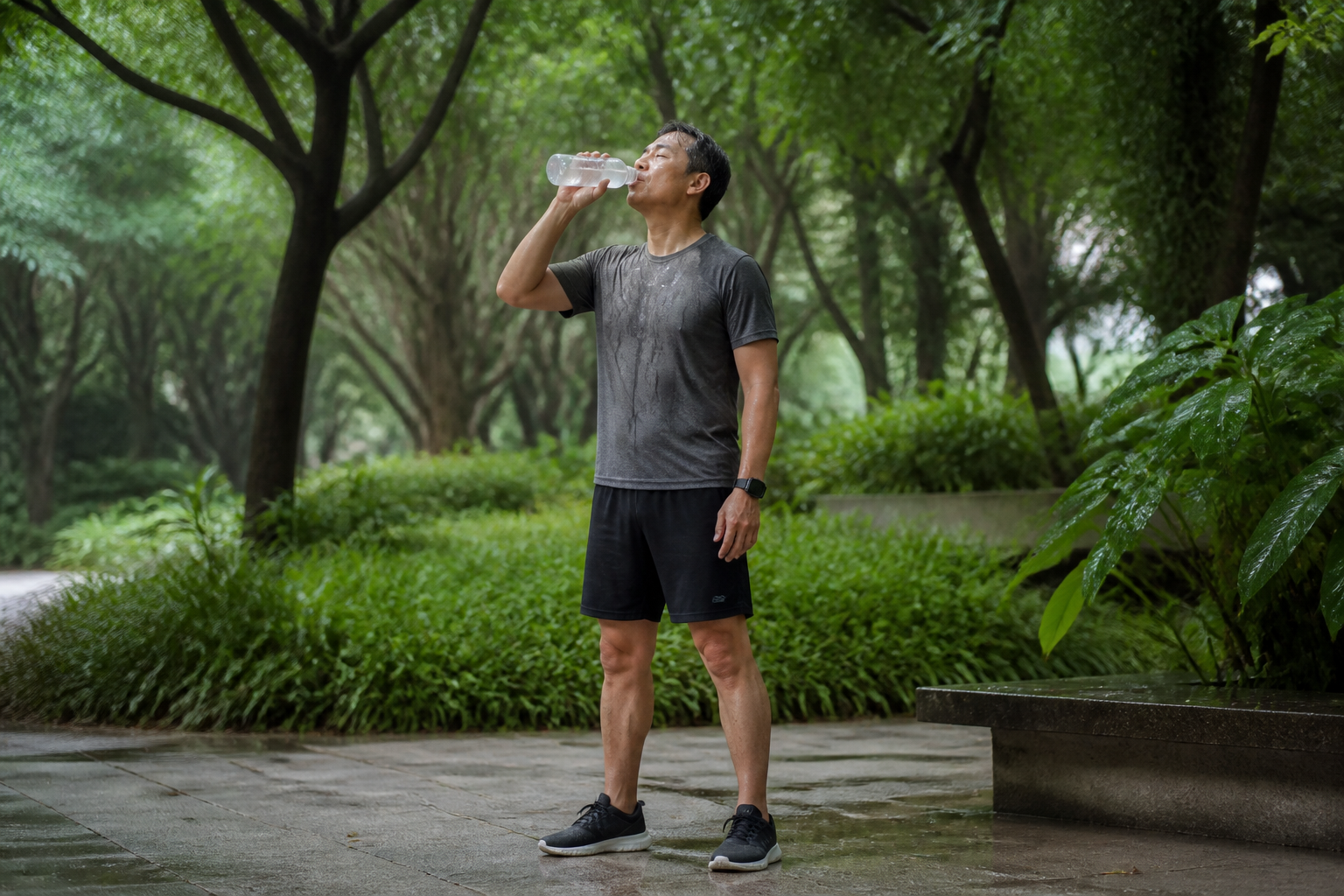
If you are healthy, you can keep exercising through Ramadan. Train a little less often, keep sessions short, and move the harder work to after iftar, when you can eat and drink. Two strength sessions and a few easy walks a week will hold your fitness for the month.
This page deals with fasting only as a physical question. Whether you may fast is for you, your doctor and your religious teacher to decide. For exemption or rukhsah, ask a qualified religious authority.
How does fasting change what your body can do?
In Malaysia, where day length barely changes through the year, you go about 13 hours with no fluid and no fresh fuel. The liver usually keeps blood sugar steady, so easy walking and mobility work feel fine for most people. Hard intervals, long sessions and heavy lifting feel worse because you cannot top up fluid or carbohydrate.
A review of Ramadan and sports performance (Chaouachi et al., 2009) concluded that training can be maintained when sleep, nutrition and training load are looked after. Poor sleep matters as much as the fast itself. Late terawih and an early sahur can leave you short of sleep, which is often the real reason training feels flat.
Expect a rough first week. Energy, mood and focus usually settle by the second.
When is the best time to exercise while fasting?
Choose the slot that lets you drink and eat soon afterwards.
| Time | Pros | Cons | Suited to |
|---|---|---|---|
| 1 to 2 hours after iftar | Fed, can drink, cooler | Late evening can delay sleep, terawih clash | Strength training, brisk walks |
| Before sahur | Can drink and eat straight after | Short sleep, stiff body | Gentle walk or mobility only |
| 30 to 60 minutes before iftar | Eat soon after | Low energy, heat, dehydration risk | Very easy walking, stretching |
| Midday and early afternoon | None for fasting | Hottest period, no fluids | Avoid |
Most adults over 40 find the post-iftar window the most comfortable. Wait for your meal to settle, around 60 to 90 minutes, so you are not training on a full stomach. If terawih is part of your evening, a short session either before it or after it works, as long as you still sleep.
How should you hydrate and eat to support training?
Your hydrating has to happen between iftar and sahur. A litre in ten minutes will not do it; sip steadily across the evening. About 2 litres (around 8 glasses) between meals is a common starting point, with more on hot days or after training, unless your doctor has restricted your fluids, for example in heart or kidney disease.
At the Malaysian table:
- Break the fast with dates and water, then a proper meal after a short pause.
- Choose rice or noodles in sensible portions, and add protein: ikan, ayam, telur, tempeh, tauhu or dal.
- Limit very sweet kuih and sugary drinks such as teh tarik and sirap bandung, which spike and then drop your energy.
- At sahur, include protein and slow carbohydrate, for example eggs with oats or wholemeal bread, and drink water.
- Add fruit with high water content, such as watermelon and cucumber.
For more on fluid in the tropics, read staying hydrated in tropical heat. For the wider question of fasting and training, see intermittent fasting and exercise.
What does a simple 2-day Ramadan strength plan look like?
Muscle is usually kept if you keep lifting. A systematic review of intermittent fasting with resistance training found that lean mass was generally maintained (Keenan et al., 2020). A 2023 trial in 40 men found that strength training during Ramadan did not harm strength or muscle gain whether done fasted or fed, with larger strength gains when training fed after iftar (Triki et al., 2023). For adults 40 and over, that means short, controlled sessions rather than a full gym programme.
Do this 2 days a week, 1 to 2 hours after iftar, about 25 to 30 minutes:
- Sit-to-stand from a chair: 2 sets of 8 to 10.
- Wall or incline push-up: 2 sets of 8 to 10.
- Band or dumbbell row: 2 sets of 10 per side.
- Glute bridge: 2 sets of 10.
- Farmer’s carry or suitcase carry with a shopping bag: 2 walks of 20 metres.
Rest 60 to 90 seconds between sets. Keep the effort at about 6 to 7 out of 10, so you could do 3 more reps. Drink water between sets. If you are new to lifting, start with strength training for beginners over 40 and use the home setups in strength training at home in Malaysia.
On the other days, a 20 to 30 minute easy walk after iftar is plenty. See walking for longevity for pacing ideas.
Who should check with a doctor before exercising while fasting?
Speak to your doctor, ideally 6 to 8 weeks before Ramadan, if you have any of these:
- Type 1 or type 2 diabetes, especially if you take insulin or sulphonylureas. The IDF and DAR guidelines classify fasting risk and advise individual planning. See also exercise for type 2 diabetes.
- Heart disease, uncontrolled high blood pressure, or heart failure.
- Kidney disease or kidney stones.
- Pregnancy or breastfeeding.
- Regular medicines whose timing or dose may need to change.
- Dizziness, fainting or low blood pressure at baseline.
Older adults living with frailty can use the FRAIL scale to see whether they need a more careful plan, and caregivers can find help at for caregivers.
What are the red flags that mean you should stop?
Stop exercising at once if you notice:
- Dizziness, blurred vision, or a feeling you may faint.
- Chest pain, pressure, or unusual breathlessness.
- A racing, irregular heartbeat.
- Heavy sweating with cold, clammy skin and confusion, or no urine for many hours.
- Shaking, sudden hunger, or sweating that may mean low blood sugar in people with diabetes.
If low blood sugar is suspected, people with diabetes are advised in the guidelines to break the fast. Any chest pain or fainting needs medical review the same day.
How do you handle heat and haze in the fasting month?
The heat and humidity do not pause for Ramadan. Keep outdoor walks to the cooler evening hours, wear light clothing, and shorten sessions on very humid nights. Check the Air Pollutant Index before walking outside, and move indoors to a mall or home routine if air quality is poor. See exercising in Malaysia’s heat and humidity and should you exercise during the haze.
Key takeaways
- Healthy adults can keep training in Ramadan with shorter, lighter sessions.
- Strength work fits best after iftar.
- Hydrate and eat protein between iftar and sahur, and protect your sleep.
- Two 25-minute strength sessions a week are a sensible target to maintain muscle.
- Check with your doctor first if you have diabetes, heart or kidney disease, or take regular medicines, and ask religious authorities about any exemption questions.