Semaglutide and tirzepatide cut fat but also lean mass. What the STEP 1 and SURMOUNT-1 DXA data show, and how lifting and protein protect muscle.
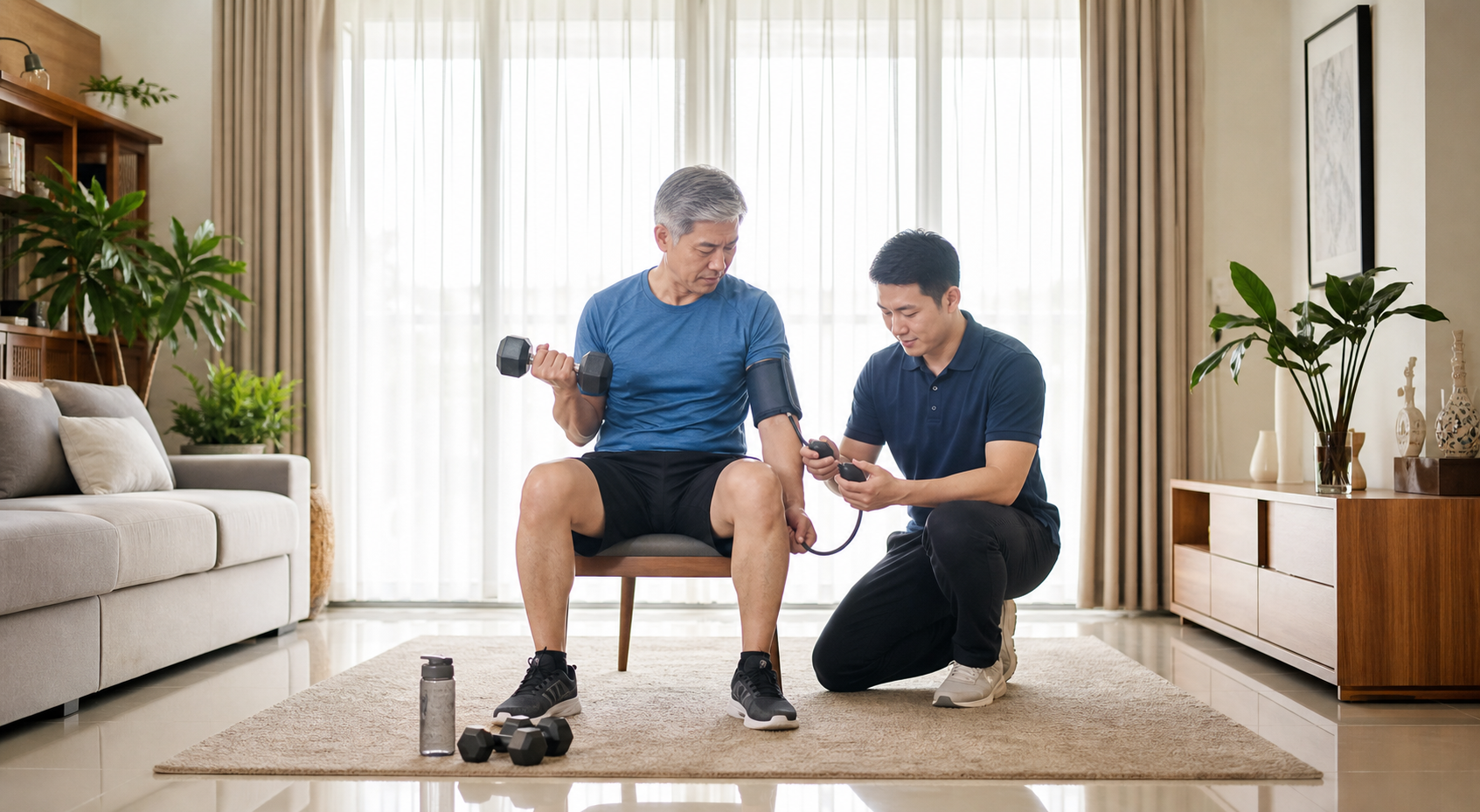
Semaglutide and tirzepatide reduce weight mainly by cutting body fat, but they also reduce lean mass. In the STEP 1 DXA substudy, lean body mass fell 9.7 percent on semaglutide, and in the SURMOUNT-1 DXA substudy it fell 10.9 percent on tirzepatide. Resistance training and enough protein are the main ways to keep strength while the weight comes off.
This article is for people who already use a GLP-1 medicine, or are considering one, and want to protect their muscle. It is general education. Decisions about the medicine belong with your doctor.
What do the trials show about lean-mass loss?
Both major trials ran DXA (dual-energy X-ray absorptiometry) scans in subgroups.
| Trial | Medicine | DXA participants | Duration | Fat mass change | Lean mass change |
|---|---|---|---|---|---|
| STEP 1 substudy | Semaglutide 2.4 mg weekly | 140 (95 drug, 45 placebo) | 68 weeks | -19.3% | -9.7% |
| SURMOUNT-1 substudy | Tirzepatide (pooled doses) | 160 (124 drug, 36 placebo) | 72 weeks | -33.9% | -10.9% |
Other details from the reports:
- In STEP 1, visceral fat fell 27.4 percent and the proportion of body mass that was lean rose by 3.0 percentage points, because fat fell faster than lean tissue. Roughly 40 percent of the weight lost was lean mass in the semaglutide group, according to summaries of the substudy.
- In SURMOUNT-1, the mean absolute lean-mass change was -5.6 kg with tirzepatide versus -1.2 kg with placebo. About 75 percent of the weight lost was fat and 25 percent lean mass, the same split in both the tirzepatide and placebo groups.
- The SURMOUNT-1 participants were 73 percent women with a mean weight of 102.5 kg.
Two cautions help to read these numbers. First, DXA “lean mass” includes water, organs and connective tissue as well as muscle, so a fall in lean mass is not the same as an equal fall in muscle. Second, the participants were advised on lifestyle but did not follow a supervised lifting programme, so these trials describe what happens without a deliberate strength plan.
A 2024 review in The Lancet Diabetes and Endocrinology (Prado et al.) argued that muscle loss during medically induced weight loss deserves attention, because on a yearly basis the decline can be several times the usual age-related loss of about 0.8 percent a year. Whether this loss translates into worse function in everyday life is still being studied, so strength tests such as grip and chair stand give a more useful picture than a scan.
Why does muscle matter more with age?
Strength supports balance, walking speed, blood-sugar control and independence. Low muscle strength and mass raise the risk of falls and hospital admission. If you are over 60 or already have low reserves, losing even a modest amount can push you towards sarcopenia. The Asian definition (AWGS 2019) flags grip strength below 28 kg in men and 18 kg in women, and our sarcopenia diagnosis guide explains how to test yourself.
People with obesity can also have low muscle quality, known as sarcopenic obesity, and rapid weight loss may worsen it. Read sarcopenic obesity for the background.
What does resistance training do for lean mass during weight loss?
There are no large trials that combine tirzepatide or semaglutide with a standard lifting programme and report muscle outcomes as their primary result, so the specific advice here is drawn from the wider evidence. Progressive resistance training reliably increases strength in older adults (Liu and Latham, Cochrane), and in weight-loss studies of diet alone it helps to retain lean tissue compared with diet only. It is reasonable to expect the same principle to apply on a GLP-1 medicine, but this is an extrapolation, not a proven result.
A practical programme:
- Train all major muscle groups two to three times a week, on non-consecutive days.
- Pick 6 to 8 exercises: a squat or sit-to-stand, hip hinge, push (wall or incline push-up), row, step-up, carry, and calf raise.
- Do 2 to 3 sets of 8 to 12 repetitions at a hard but controlled effort, finishing with 2 repetitions in reserve.
- Increase the load when you can finish all sets with good form. Even small increments count.
- Add a daily walk, building towards 7,000 to 8,000 steps if your joints allow.
- Reassess strength every 8 to 12 weeks.
Technique guides on the site cover the basics: how to do a squat, a hip hinge and a resistance band row. If appetite is very low or you feel weak, begin with two sessions and keep them short. A 30-minute session is enough; see the 30-minute longevity workout.
How much protein do you need on a GLP-1 medicine?
For healthy older adults, intakes of about 1.0 to 1.2 g per kg per day are commonly recommended, and during weight loss many dietitians suggest 1.2 to 1.6 g per kg to protect lean mass. This range is expert consensus, not a trial-proven target for GLP-1 users. People with kidney disease should agree a limit with their doctor.
For a 75 kg person, 1.2 to 1.6 g per kg is 90 to 120 g a day. When appetite is low, that can be hard. Try these Malaysian-friendly ideas:
- Two eggs at breakfast, with or without wholemeal bread, instead of only kaya toast or plain porridge.
- A palm-sized portion of fish, chicken or tofu at both lunch and dinner, with fewer refined carbohydrates.
- Tempeh, dhal or chickpea dishes when you do not want much meat.
- Plain yoghurt, soy milk or a protein shake as a small, easy snack.
- Eat the protein first at the meal, because fullness arrives quickly on these medicines.
The protein calculator gives a personal range, and how much protein after 50 and protein timing after 50 cover distribution across the day. Also drink enough fluid, because nausea, vomiting or poor intake can cause dehydration. Fibre, vitamin D and calcium intakes should also be reviewed with a dietitian.
What does a week look like on a GLP-1 medicine?
Energy and appetite are often lower, especially after a dose increase, and nausea tends to peak in the first days after the weekly injection. Plan around that.
| Day | Session | Time |
|---|---|---|
| Monday | Full-body strength: squat or sit-to-stand, row, push, hinge | 30 to 40 min |
| Tuesday | Brisk walk, Zone 2 effort | 30 min |
| Wednesday | Rest or gentle mobility | 10 to 15 min |
| Thursday | Full-body strength, one exercise heavier than Monday | 30 to 40 min |
| Friday | Brisk walk or cycling | 30 min |
| Saturday | Optional third strength day or a longer walk | 30 to 45 min |
| Sunday | Rest | n/a |
If you feel unwell on injection day, make that your rest day. If a session is missed, do not double up; carry on with the plan.
Common mistakes to avoid
- Relying on cardio alone. Walking helps, but it does little to preserve strength.
- Eating so little that protein falls well below the target. Appetite suppression is the reason to plan protein deliberately.
- Chasing the scale only. A body-composition scan, waist-to-height ratio and strength tests tell you more. See DEXA body composition in Malaysia and the waist-to-height tool.
- Training hard while dehydrated or nauseated. Reduce the load, and hydrate.
- Skipping strength tests. Retest grip, chair stand and gait speed with the grip strength test and sit-to-stand test so you can see whether function holds steady.
Is this advice different in Malaysia?
The clinical principles are the same, but the food and climate details differ. Rice, noodles and sweet drinks often dominate meals, so protein has to be added deliberately and sugary drinks reduced. Hot, humid weather makes dehydration more likely when intake is already low, so train in cooler hours or indoors; see exercising in Malaysia’s heat and humidity. Access also varies, since these medicines are prescription-only and costs differ between public and private care, so ask your doctor for the right option and follow-up.
What about stopping the medicine?
Weight regain after stopping is common, and body composition on regain is not fully studied. If you plan to stop, keep your lifting routine going, since it is the part that stays with you. Discuss the plan with your prescriber rather than stopping abruptly.
When should you tell your doctor?
Contact your doctor if you have:
- Persistent vomiting, severe abdominal pain, or signs of dehydration such as dizziness and very dark urine.
- Rapid weight loss beyond what your plan expects.
- Falls, new weakness, or difficulty rising from a chair.
- Symptoms of low blood sugar if you also take insulin or a sulfonylurea. See exercising on common medications.
For related guidance on losing weight without losing function, read exercise for weight loss that lasts and visit the nutrition for longevity hub.
Key takeaways
- STEP 1 (semaglutide) and SURMOUNT-1 (tirzepatide) DXA substudies show lean-mass falls of 9.7 percent and 10.9 percent, with about a quarter to two-fifths of weight lost being lean mass.
- DXA lean mass is not purely muscle, and neither trial included a lifting programme.
- Two to three resistance sessions a week, a daily walk and about 1.2 to 1.6 g protein per kg are sensible, expert-based measures.
- Check grip strength and chair-stand performance at the start and every few months.