Exercise is a core treatment for Parkinson's. See which types have the best evidence, how hard to train, how to protect balance, and when to get advice.
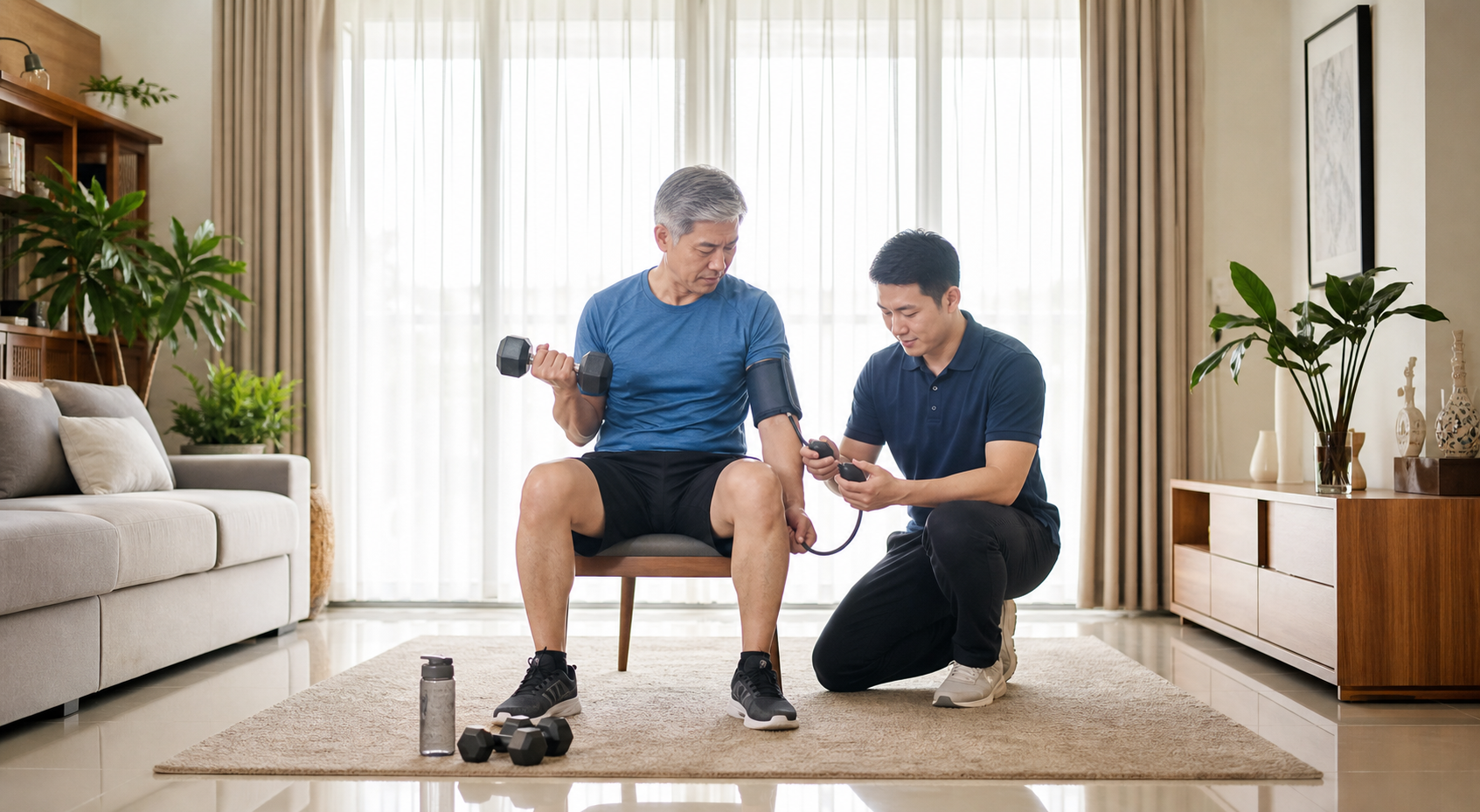
Exercise is one of the few treatments for Parkinson’s that you control yourself. Aerobic exercise, strength training, balance training and large-amplitude movement practice all have supporting evidence, and a mix of them tends to work best. Train when your medication is working, keep your environment safe, and work with a physiotherapist who knows Parkinson’s.
Why does exercise matter so much in Parkinson’s?
Parkinson’s disease slows and shrinks movement, affects balance and posture, and often brings fatigue, low mood and sleep problems. Medication treats the chemical shortage. Exercise trains the brain and body to move better despite it.
The largest summary of evidence is a Cochrane review of 156 randomised trials with 7,939 participants. It found that exercise of many types improved motor symptoms and quality of life compared with no exercise. The American Physical Therapy Association (APTA) guideline, published in 2022, gives strong recommendations for moderate to high intensity aerobic exercise, resistance training and balance training.
In practice, exercise is not an optional extra. It sits beside medication in your plan.
Malaysia has a growing number of people with Parkinson’s, and local studies show that non-motor symptoms such as fatigue, constipation and sleep problems are common. Regular activity helps with these as well. Some Malaysian physiotherapists are now trained in LSVT BIG, a programme of large-amplitude movement, with a certification course held in Kuching.
What types of exercise should I do?
| Type | What it targets | Examples |
|---|---|---|
| Aerobic | Fitness, mood, fatigue | Brisk walking, stationary cycling, treadmill |
| Resistance | Strength, power, posture | Sit-to-stand, band rows, leg press |
| Balance and agility | Falls, turning, stepping | Tandem stance, weight shifts, obstacle stepping |
| Big-amplitude movement | Small, slow movement (bradykinesia) | Large arm swings, big steps, LSVT BIG-style drills |
| Dance, tai chi, boxing-style classes | Combined, social | Group classes, senamrobik |
Pick two or three that you will actually keep doing. The Cochrane review found no clear winner, so enjoyment and access matter. Local options such as tai chi and qigong for older Malaysians and senamrobik suit many people.
How much and how hard?
The 3-day, 30-minute aerobic target matches Parkinson’s Foundation advice, and the European physiotherapy guideline supports at least 150 minutes a week of moderate aerobic activity over time. Use these as a starting target for adults 40 and over, and adjust with your clinician.
- Aerobic: 3 days a week, building from 15 minutes to 30 minutes. Aim for moderate effort, where you can talk in short sentences. Many trials used higher efforts, but work up to them gradually. Use the heart rate zones tool or the talk test.
- Strength: 2 to 3 days a week, 1 to 2 sets of 8 to 12 repetitions for the legs, hips, back and shoulders. Slow lowering phases build control. See strength training for beginners over 40.
- Balance: 2 to 3 days a week, 10 minutes. Start next to a wall or counter.
- Big movements: a few minutes daily. Stand tall, take exaggerated steps, swing the arms wide, and say to yourself “big”.
For setting loads safely, see sets, reps and rest for older adults.
How do I handle balance, freezing and walking?
Parkinson’s reduces the automatic quality of walking, so the brain has to supply attention. Cues can help.
- Visual cues: step over lines on the floor or a rolled towel.
- Rhythm cues: walk to a metronome app or music with a steady beat; around 100 beats per minute is a common starting point in practice.
- Mental cues: think “big steps” and “heel first”.
- Turning: make wide arcs rather than pivoting on the spot.
For freezing in a doorway, stop, shift your weight side to side, then step with the cue. A physiotherapist can tailor this. Practise doing two things at once in a safe setting, as in dual-task training, because freezing and falls often happen when attention is divided.
Balance basics are in balance exercises to prevent falls and walking balance exercises. Our balance and stability training hub gathers the rest.
How should I set up at home in Malaysia?
- Train on a non-slip floor. Polished tiles are slippery, especially after mopping or in humid weather.
- Remove loose rugs and keep a sturdy chair, counter or wall within reach.
- Wear closed, supportive shoes rather than slippers or sandals.
- Exercise in the cooler morning or evening, or indoors with a fan or air-conditioning. Heat adds to fatigue and light-headedness. See exercising in Malaysia’s heat and humidity.
- Time sessions when your medication is working, which is usually within an hour or two of a dose, but follow your own pattern.
- Drink water through the session. Low blood pressure on standing is common in Parkinson’s.
What are the safety red flags?
Check with your neurologist or doctor before starting, especially if you have heart disease, deep brain stimulation, frequent falls or dizziness on standing. Stop and get advice if you have:
- chest pain, severe breathlessness or palpitations
- fainting or feeling about to faint when you stand up
- a fall with head injury or new severe pain
- new confusion, hallucinations or a sudden change in your usual symptoms
- worsening freezing that makes you unsafe
If you have a deep brain stimulator, ask your team whether any equipment, such as some therapy machines, is a problem. If you have another condition as well, ask your clinician how to progress; see exercise and heart disease or exercise on common medications.
Who can help?
A physiotherapist with Parkinson’s experience can set your programme, teach cues and check your technique. A family member or carer who exercises with you can improve consistency. The exercise for chronic conditions hub lists related guides, and the ageing parents hub helps families organise support. Parkinson’s societies in Malaysia, including the one in Kuching, can point to local groups.
What are common mistakes with Parkinson’s exercise?
- Waiting for symptoms to worsen. Exercise works best when started early and kept up. It still helps in later stages, but the programme needs adjusting.
- Only doing gentle walking. Walking is useful, but strength, balance and bigger-effort work give extra benefit.
- Exercising during an off period. Stiffness and slowness make sessions harder and riskier. Move the session to your better window.
- Training alone on slippery floors. Have a family member or helper nearby, especially when you add new balance drills.
- Going too hard too soon. Fatigue is a real Parkinson’s symptom. Build up over weeks and allow rest days.
- Skipping reviews. Needs change as the condition changes, so review your programme every few months with your physiotherapist.
Voice and swallowing exercises are separate from this guide and are taught by speech therapists, so ask your neurologist for a referral if you need them.
Key takeaways
- Exercise is a core part of Parkinson’s care, supported by a Cochrane review of 156 trials and a 2022 APTA guideline.
- Combine aerobic, strength, balance and big-movement practice, 3 or more days a week.
- Train when your medication is working, on safe floors, with a wall or rail nearby.
- Use visual, rhythm and mental cues for walking and freezing.
- Stop and seek help for chest pain, fainting, a serious fall or sudden new symptoms.