What to do in your 30s to build strength, bone and fitness reserves: a weekly plan, a minimum dose for busy people and Malaysian tips.
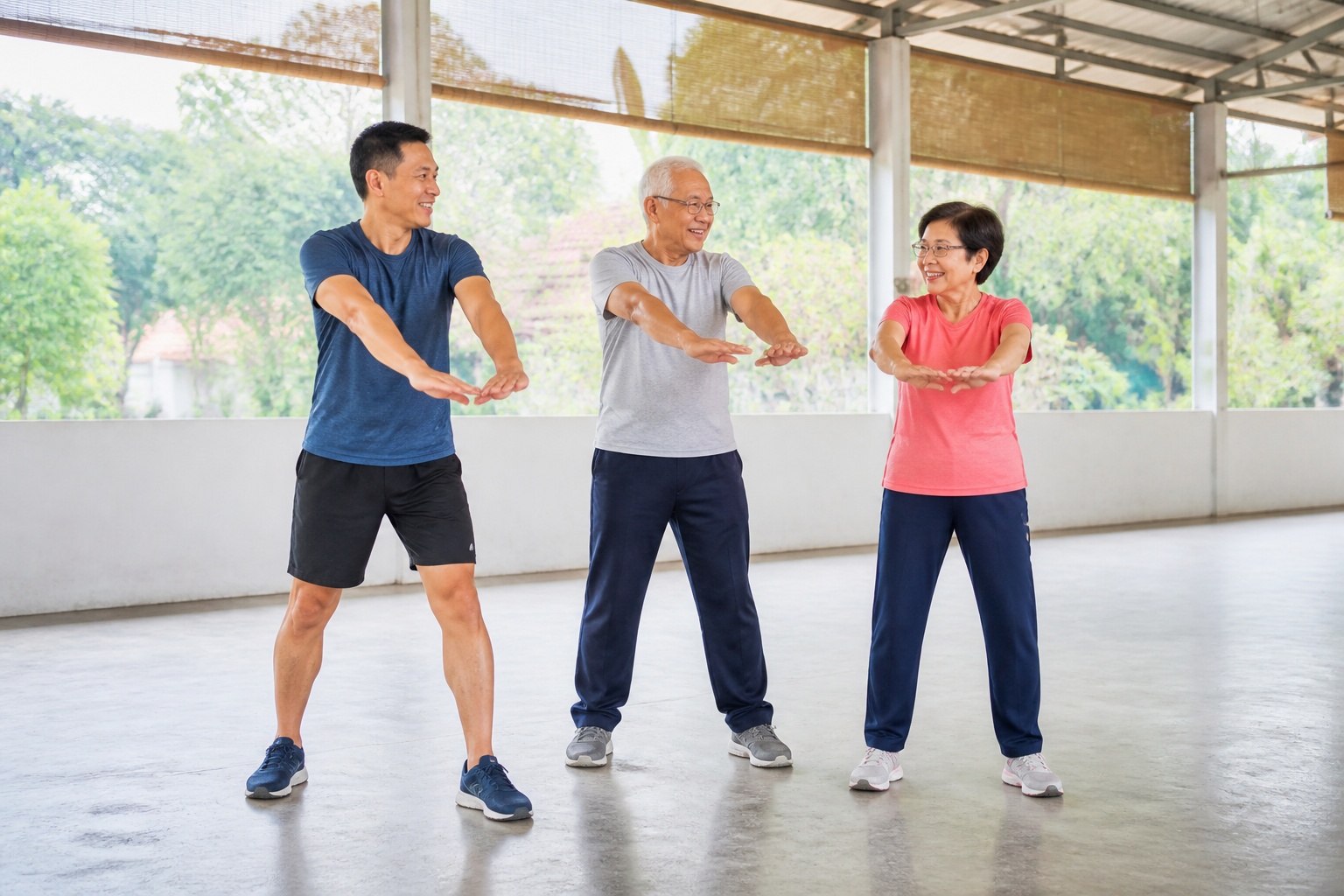
In your 30s, the best exercise plan is two strength sessions and about 150 minutes of brisk cardio a week, built into a routine you can still do at 60. This is the last decade when muscle, bone and fitness are easy to build, and a higher peak now gives you more reserve later. It does not need to be heroic: two short sessions at home and regular walking are enough to start.
Why your 30s matter
Muscle, strength and bone density usually peak in young adulthood. After that, the decline is slow at first and speeds up later, especially if you sit a lot and do not train. The ACSM bone position stand notes that bone mass built early is the foundation for later bone health, and impact and resistance exercise are the main training tools.
Fitness matters too. In a meta-analysis in JAMA, each 1-MET higher cardiorespiratory fitness was linked with about a 13 percent lower risk of death from any cause and a 15 percent lower risk of heart disease and cardiovascular events. In another analysis, people who did muscle-strengthening activity had roughly 10 to 17 percent lower risk of death, cardiovascular disease and cancer, with the biggest gain at about 30 to 60 minutes a week.
None of this means you must train hard. It means the habit you build now compounds, and it is easier to keep a habit than to restart one at 50. See our decade-by-decade overview for how priorities shift later.
What to prioritise
| Priority | Weekly target | Why |
|---|---|---|
| Strength training | 2 days, 8 to 10 exercises, 2 to 3 sets of 6 to 12 reps | Builds muscle and bone while you still build them easily |
| Moderate cardio | 150 minutes, such as brisk walking or cycling | Heart health, stamina, blood sugar |
| Higher-intensity work | 1 short session, 15 to 25 minutes of intervals | Raises VO2 max |
| Mobility and balance | 5 to 10 minutes most days | Keeps joints moving and prevents stiffness |
These targets follow the WHO 2020 guidelines, which give 150 to 300 minutes of moderate activity a week, or 75 to 150 minutes of vigorous activity, and muscle strengthening on at least two days.
Strength basics
Choose compound movements you can learn well: squat, hip hinge, push-up variation, row and farmer’s carry. Do 2 to 3 sets of 6 to 12 reps, stop 1 to 3 reps short of failure, and add weight or reps when the target feels comfortable. The strength training for longevity guide explains progression, and our strength standards tool gives rough targets.
Cardio basics
Aim for most of your cardio at an easy to moderate effort where you can talk but not sing, as in Zone 2 cardio. Add one weekly session of intervals, for example 4 rounds of 4 minutes hard and 3 minutes easy once you are comfortable. Our heart rate zones tool helps with pacing.
A sample 30-minute strength session
| Exercise | Sets and reps | Notes |
|---|---|---|
| Goblet squat or bodyweight squat | 3 x 8 to 12 | Heels down, knees tracking over toes |
| Hip hinge (Romanian deadlift or hip hinge with a backpack) | 3 x 8 to 10 | Flat back, push hips back |
| Push-up (wall, incline or floor) | 3 x 6 to 12 | Choose a level you can control |
| One-arm row or band row | 3 x 8 to 12 per side | Squeeze the shoulder blade back |
| Farmer’s carry | 3 x 30 seconds | Tall posture, steady walk |
| Dead bug or plank | 2 x 20 to 30 seconds | Keep the lower back steady |
Rest 60 to 90 seconds between sets. Increase weight when you can do the top of the rep range with 2 reps in reserve on every set.
A minimum-dose week for busy people
| Day | Session |
|---|---|
| Mon | Strength, 30 minutes |
| Tue | Brisk walk or cycle, 25 minutes |
| Wed | Rest, 10-minute walk after dinner |
| Thu | Strength, 30 minutes |
| Fri | Easy cardio, 25 to 30 minutes |
| Sat | Longer walk or sport, 45 to 60 minutes |
| Sun | Rest or mobility |
That is about 2 hours of structured exercise, with extra walking on top. If a week falls apart, do one 20-minute strength session and two walks. The strategies in staying consistent when life gets busy and exercise snacks for desk workers help here.
Common 30s situations
- Desk job and long commute. Stand and move every 30 to 60 minutes, and walk after lunch. Sitting time matters even if you exercise. See sitting and longevity.
- New parent. Start with walking and pelvic floor and core work, and return to heavier lifting gradually. See postnatal return to training.
- Shift work. Keep two strength days fixed on your days off, and use short sessions around shifts. Sleep matters as much as training, as covered in sleep and longevity.
- Weekend warrior. If you only play sport at weekends, add two weekday strength sessions to reduce injury risk.
- Mamak suppers and sweet drinks. Metabolic conditions such as diabetes and high blood pressure are common in Malaysia, and weight tends to creep up in this decade. Walking after dinner and two strength sessions a week help.
Training in Malaysian heat and routines
Heat and humidity make midday outdoor cardio hard, so walk or run before 8 am or after sunset and keep strength work indoors. Long commutes make home training attractive, and a pair of dumbbells or resistance bands is enough. If the haze is bad, switch to an indoor session, as in indoor exercise for hot and hazy days. Hawker and mamak meals are fine in moderation, but pair them with protein, vegetables and a post-meal walk where possible.
Start where you are
If you have not exercised in years, start with two 15-minute walks and two short strength sessions, and add a little each week. See how to restart exercise after a break. You do not need a gym, and a no-equipment workout is enough to begin.
Safety and red flags
Most healthy 30-somethings can start moderate exercise without a check. See a doctor first if you have chest pain or pressure, breathlessness out of proportion to effort, fainting, palpitations, a known heart, lung or kidney condition, diabetes, or a strong family history of early heart disease. Stop a session for chest pain, dizziness or severe breathlessness. Persistent joint pain, back pain with leg numbness or weakness, or an injury that does not settle in a few weeks should be assessed by a physiotherapist or doctor. This is general education, not medical advice.
Measure so you can see progress
Pick two or three simple tests, such as grip strength, a 30-second sit-to-stand and a walking or cycling fitness test, and repeat them every 12 weeks. See fitness tests you can do at home. If you would like a plan and a baseline, we run home-visit assessments across KL and Selangor.
Key takeaways
- In your 30s, aim for two strength sessions, about 150 minutes of moderate cardio, and a little mobility and balance each week.
- Higher fitness and regular strength training are linked with lower risk of early death, so building a peak now pays off later.
- When time is short, a minimum dose of two 30-minute strength sessions and two or three brisk walks still counts.
- Build sleep, stress management and sensible eating around the training.